
Hot Rubber Crack Filling
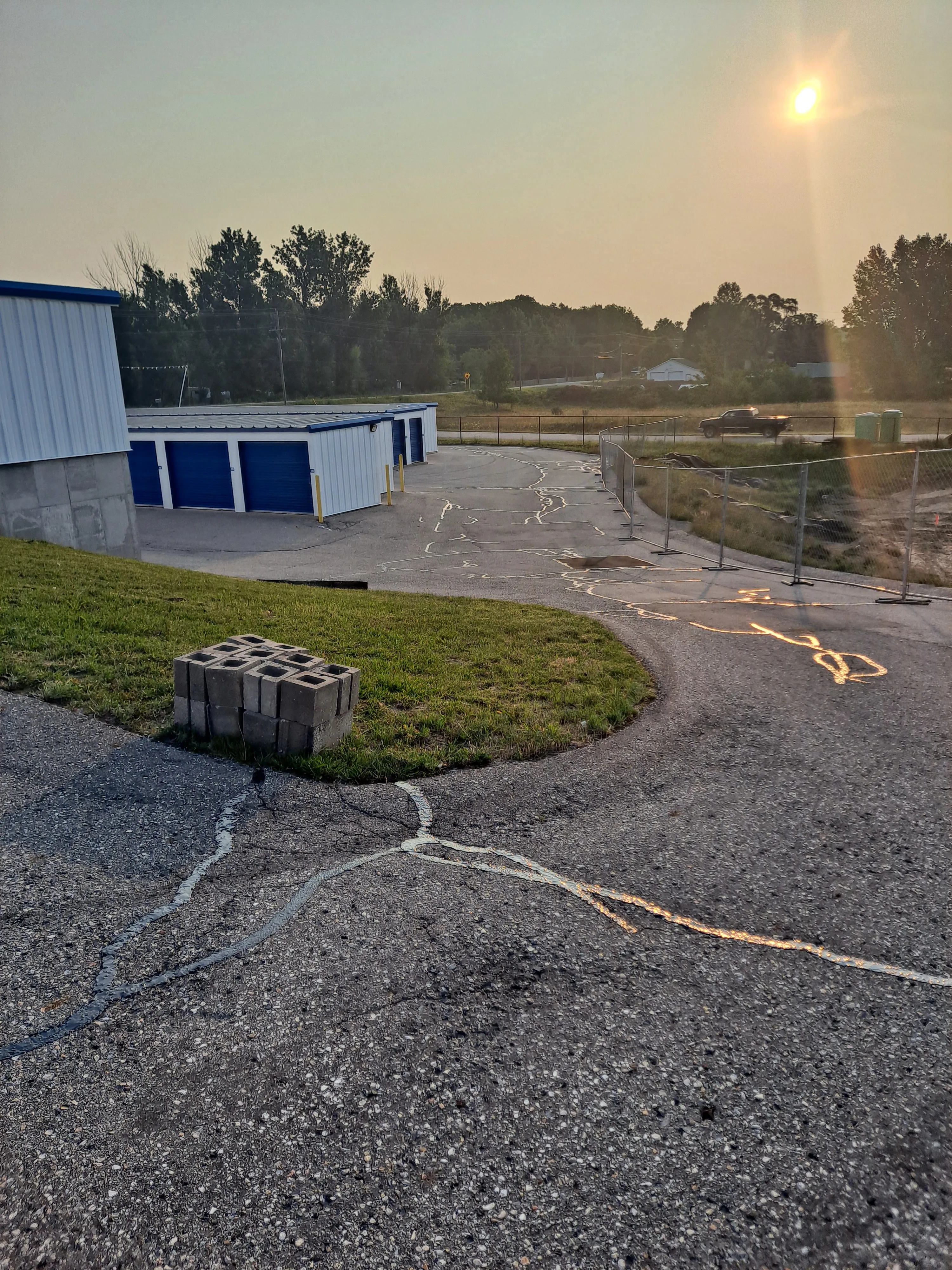
Cracks are how asphalt dies in Michigan. Water gets in, freezes, expands, and turns small cracks into alligatored areas and potholes. Hot rubber crack filling seals them shut before that cycle can start.
Our process involves melting solid, polymer-modified rubberized asphalt blocks to roughly 375°F to 400°F inside a specialized melter kettle and pouring the liquid directly into a prepared crack. As it cools, it forms a highly flexible, watertight seal that expands and contracts with changing temperatures.
That flexibility is the key. Cold-pour crack fillers from the hardware store shrink, crack, and pull away within a season. Hot rubber stays bonded and moves with the pavement through Michigan’s brutal freeze-thaw swings, keeping water out of the base layers where the real damage happens.
Crack filling is the highest-return maintenance service in the industry: a crack sealed for a few dollars today prevents a repair that costs a hundred times more in a few years. It’s also the essential first step before sealcoating any surface.
The Benefits
Why It’s Worth It
Stops water penetration
Seals the pathway that lets water reach and destroy the gravel base beneath your asphalt.
Survives freeze-thaw
Stays flexible from summer heat to sub-zero cold, expanding and contracting with the pavement.
Prevents potholes
Todays cracks are tomorrow’s alligatored areas and potholes — sealing them breaks the cycle.
Commercial-grade material
Polymer-modified rubber applied at 400°F bonds far better than any cold-pour product.
Our Process
How We Do It
- 1
Clean the cracks
Cracks are cleaned of vegetation, dirt, and debris with high-pressure air so the rubber bonds to sound asphalt.
- 2
Melt the rubber
Solid rubberized blocks are melted to 375–400°F in a temperature-controlled kettle.
- 3
Fill & seal
The molten rubber is poured directly into the crack and struck off flush with the surface.
- 4
Fast return to service
The seal cools and sets within minutes — most areas can take traffic almost immediately.
Related Services
Often Paired With
Sealcoating
A protective wear layer that shields your asphalt from sun, water, and chemicals — and restores that fresh, jet-black finish.
Infra-Red Patching
Radiant heat melts damaged asphalt back to a workable state and welds in new material — a seamless repair with no joints for water to attack.
Line Striping
Crisp, highly visible markings for parking stalls, fire lanes, crosswalks, and ADA compliance — the finishing touch on a professional lot.