
Parking Lot Line Striping
Line striping is the process of applying specialized, highly visible paint to asphalt surfaces to delineate parking stalls, fire lanes, traffic lanes, and pedestrian crosswalks. It’s the first thing customers see when they pull in — and one of the most important for safety and compliance.
Faded, ghosting lines make even a sound parking lot look neglected and create real liability: unclear traffic flow, ambiguous pedestrian zones, and non-compliant accessible spaces. Fresh, precise striping restores order, maximizes usable stalls, and keeps your property compliant with ADA and local fire code requirements.
We use durable, high-visibility traffic paints applied with professional striping machines for razor-straight lines and consistent coverage — whether it’s a fresh layout on new sealcoat or an exact re-stripe of your existing plan.
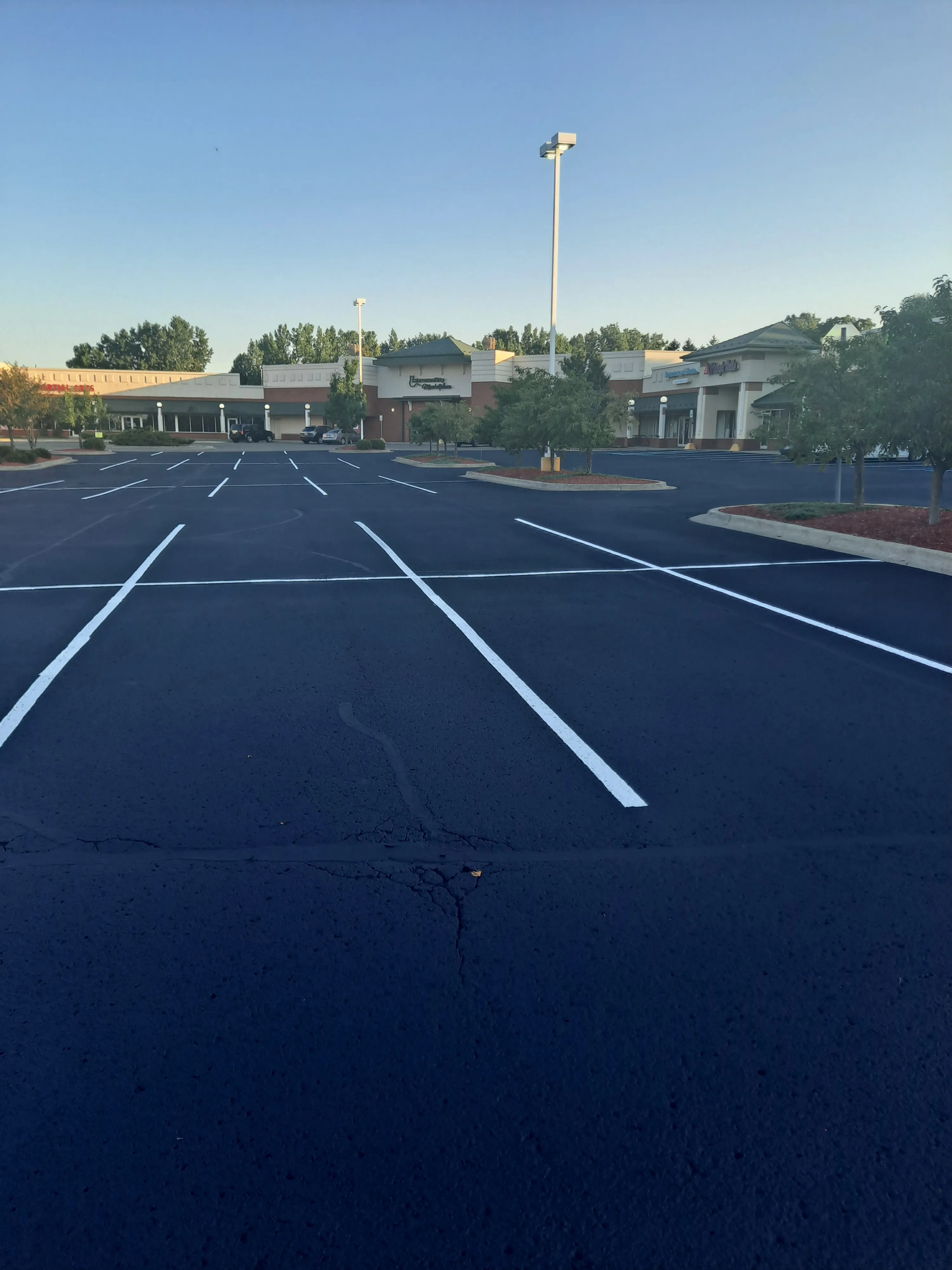
Striping is the natural final step after sealcoating: the deep black background makes new lines pop, improving visibility day and night.
The Benefits
Why It’s Worth It
Safety & flow
Clear stalls, arrows, and crosswalks guide traffic and protect pedestrians.
ADA compliance
Properly sized and marked accessible stalls, aisles, and signage keep you compliant.
Maximized capacity
A professional layout gets the most legal stalls out of your square footage.
Instant curb appeal
Crisp white and yellow lines on fresh black sealer make the whole property look sharp.
Our Process
How We Do It
- 1
Layout & plan
We re-stripe your existing layout or design a new plan for maximum capacity and compliant flow.
- 2
Surface prep
Lines are chalked and the surface is cleaned so paint bonds tightly to the asphalt.
- 3
Precision striping
Professional airless striping machines lay clean, uniform, razor-straight lines.
- 4
Stencils & markings
ADA symbols, arrows, fire lanes, and custom stencils complete the job.
Related Services
Often Paired With
Sealcoating
A protective wear layer that shields your asphalt from sun, water, and chemicals — and restores that fresh, jet-black finish.
Crack Filling
Polymer-modified rubber, melted to 400°F and poured into prepared cracks — a flexible, watertight seal that stops freeze-thaw damage.
Infra-Red Patching
Radiant heat melts damaged asphalt back to a workable state and welds in new material — a seamless repair with no joints for water to attack.